What is Cross-Over?
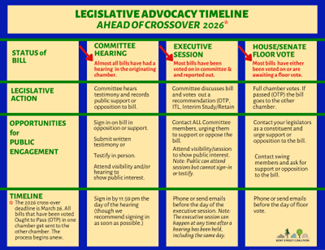
Cross-Over is the date by which the House and Senate must finish acting on all bills that started in their chamber.
Before a bill can move forward, it usually goes through:
- a public hearing (where people can sign-in and testify)
- a committee vote
- a vote of the full House or Senate
If the bill passes, it is sent to the other chamber to go through the same process. That’s called “crossing over.”
When is the deadline?
As the Cross-over date approaches, most hearings have already happened. Right now lawmakers are mainly voting on bills during House and Senate floor session.
Why things will pick up again soon:
The slowdown in hearings is temporary. After Cross-Over:
- House bills go to the Senate for hearings and votes.
- Senate bills go to the House for the same process.
So starting in early April, there will again be many opportunities to sign in and testify, especially in the Senate.
What happens after both chambers pass a bill?
- If both chambers pass the same version, the bill goes to the Governor to be signed or vetoed.
- If they pass different versions, they may negotiate a compromise through a Committee of Conference. Most of those negotiations happen toward the end of the legislative session.
As we move through the session after Crossover Day, there will be more and more action alerts asking you to contact the Governor’s office.
 Kent Street Coalition
You must be logged in to post a comment.